Belgium / A port city on the Scheldt
The city fits into a few walks. It helps to know what each one holds.
A giant lying at the foot of the Brabo Fountain while the hero above him throws the hand away. The house Rubens rebuilt as an Italian city palace. A museum standing among the docks of Het Eilandje. Choose a route and we’ll explain what you pass along the way.
Choose your route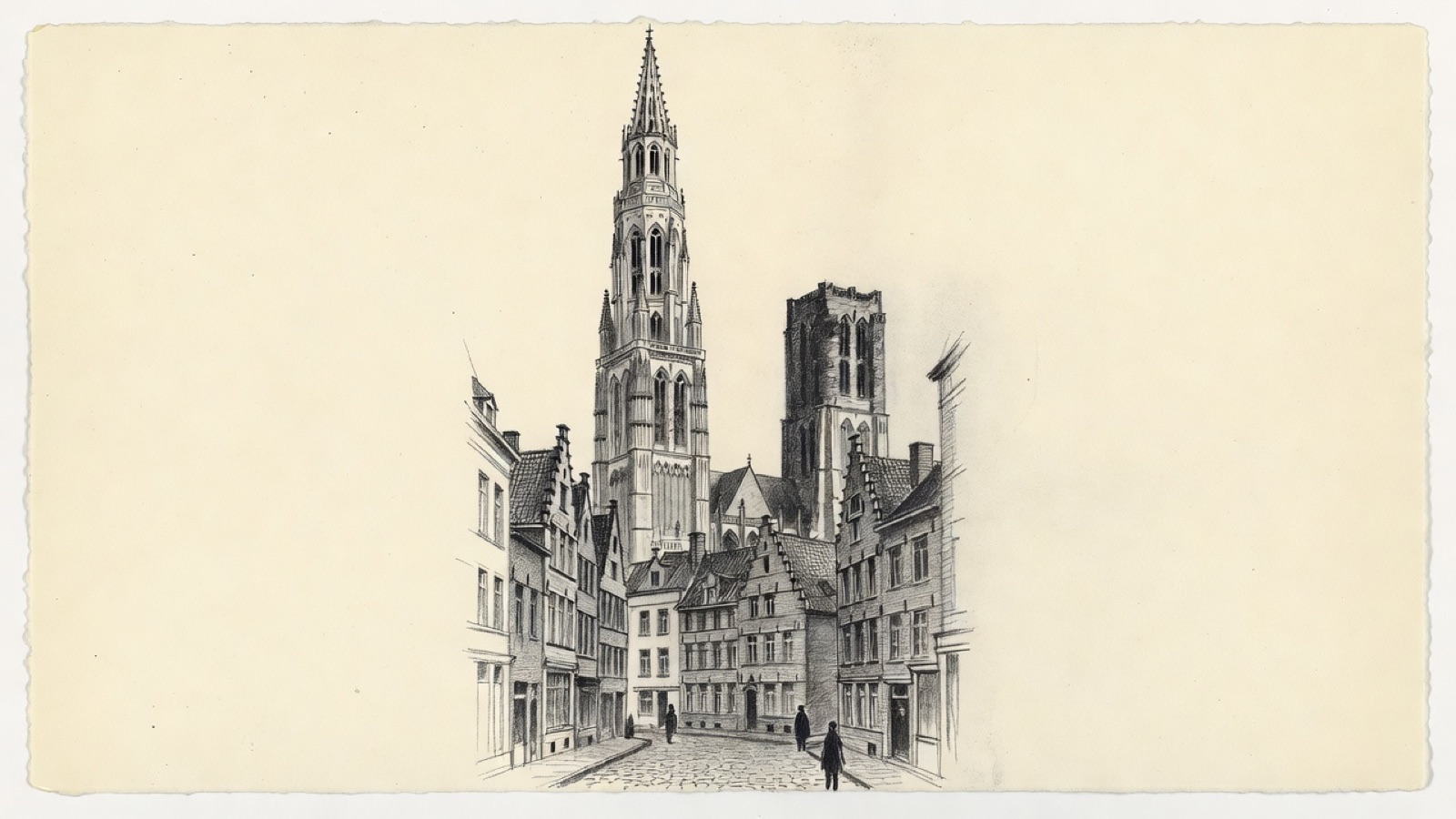
01 / Choose a walk
Five ways into Antwerp
Start with the part of the city that interests you. Each route puts its stops in walking order, with the map ready to open when you need it. You decide where to pause and when to continue.
01Faith, trade, craft
Antwerp old town: churches and trades from St. James' to the Scheldt
Rubens is buried at the second stop and stands in bronze near the end, and between the two his paintings hang in three more churches. Around them the walk passes a butchers' guildhall, a fortress gate from the early 1200s, a printing house that ran for four centuries and a tower block from 1932 that was long outdone in height only by the cathedral.
02Care, collecting, stage
Stadspark to the Rubenshuis: care, collections and a city stage
The walk starts in a park laid out on a former fortification and ends at the house a painter redesigned for himself. Between them come the spot where a southern gate once stood, a garden planted for medical students, a home for orphaned girls, and a theatre whose architect also drew the garden's gate.
03Old ground, new uses
The Zuid, where courts and museums took over older ground
The walk starts at a courthouse opened in 2006 where trains used to arrive and ends at a synagogue built in 1893. Between them stand a gate carved in 1624 for a Spanish king and a museum with bronze chariots and seven portrait medallions on its walls.
04Record & trade
Eilandje: a warehouse archive, a war memorial and two museums
A warehouse of 1858 on the Willemdok that now holds the city archive, with the MAS facing it. The route then goes west to the Loodswezen site on the Scheldt quays, where a memorial with about 25,000 names is planned, and north to the Red Star Line Museum. Next to the MAS it passes the site of the Oostershuis, a trading house that burned down in 1893.
05Rail & arrival
Station quarter: the opera, Centraal and the Zoo
A short walk through the streets around Antwerp's main station. It starts at the opera house, passes the square where the city's buses gather and ends at two neighbours: a station building finished in 1905 and, next to it, a zoo founded in 1843.
Our first five routes cover the old town, the Rubens quarter, the Zuid, Het Eilandje and the station quarter with the Zoo. Zurenborg and the left bank of the Scheldt are not yet included in the route collection.
Your pace, your stops
We don’t give walking times: everyone moves through a city at a different pace. A route is a suggestion that links places worth seeing. You decide where to stop and what you can take on today.
How these routes were made
The Antwerp routes were proposed from open map data, written from published sources and illustrated in charcoal. The walking tracks were calculated on a map and have not yet been checked on foot. The drawings are interpretations, not surveys. Read how the guide is prepared.
02 / Before choosing
The places to make room for
Antwerp’s landmarks sit close together, but several of them are interiors that need a visit of their own. These are the places to bear in mind as you choose what to explore.
01
The cathedral and the Grote Markt
The old-town route passes the Cathedral of Our Lady, the town hall and the Brabo Fountain within a few streets of each other. The square is seen from outside; the cathedral, which holds altarpieces by Rubens, is a separate visit. Check with the cathedral which works are on display before you go in.
02
Rubens’s house and garden
Rubens lived, worked and died in the house he turned into an Italian city palace. Parts of the house have been closed for restoration, so read the museum’s own page before building a day around it.
03
The museums of the Zuid
The Royal Museum of Fine Arts, the contemporary art museum M HKA and the photography museum FOMU stand in the same district. Rubens and James Ensor are among the names the Royal Museum puts first in its collection. These are three separate institutions, each with its own admission.
04
The docks of Het Eilandje
North of the old town the streets give way to dock basins, and the MAS, the Museum aan de Stroom, stands among them. The Red Star Line Museum is the last stop of the same route. De Lijn lists a tram from the old centre that passes the MAS; check its current route before relying on it.
05
The station and the Zoo
The station-quarter route ends at two neighbours: Antwerpen-Centraal, in a building finished in 1905, and the Zoo beside it, founded in 1843. The walk sees both from outside; the Zoo is a separate visit.
03 / Look closer · Grote Markt
Start at the bottom of the Brabo Fountain.
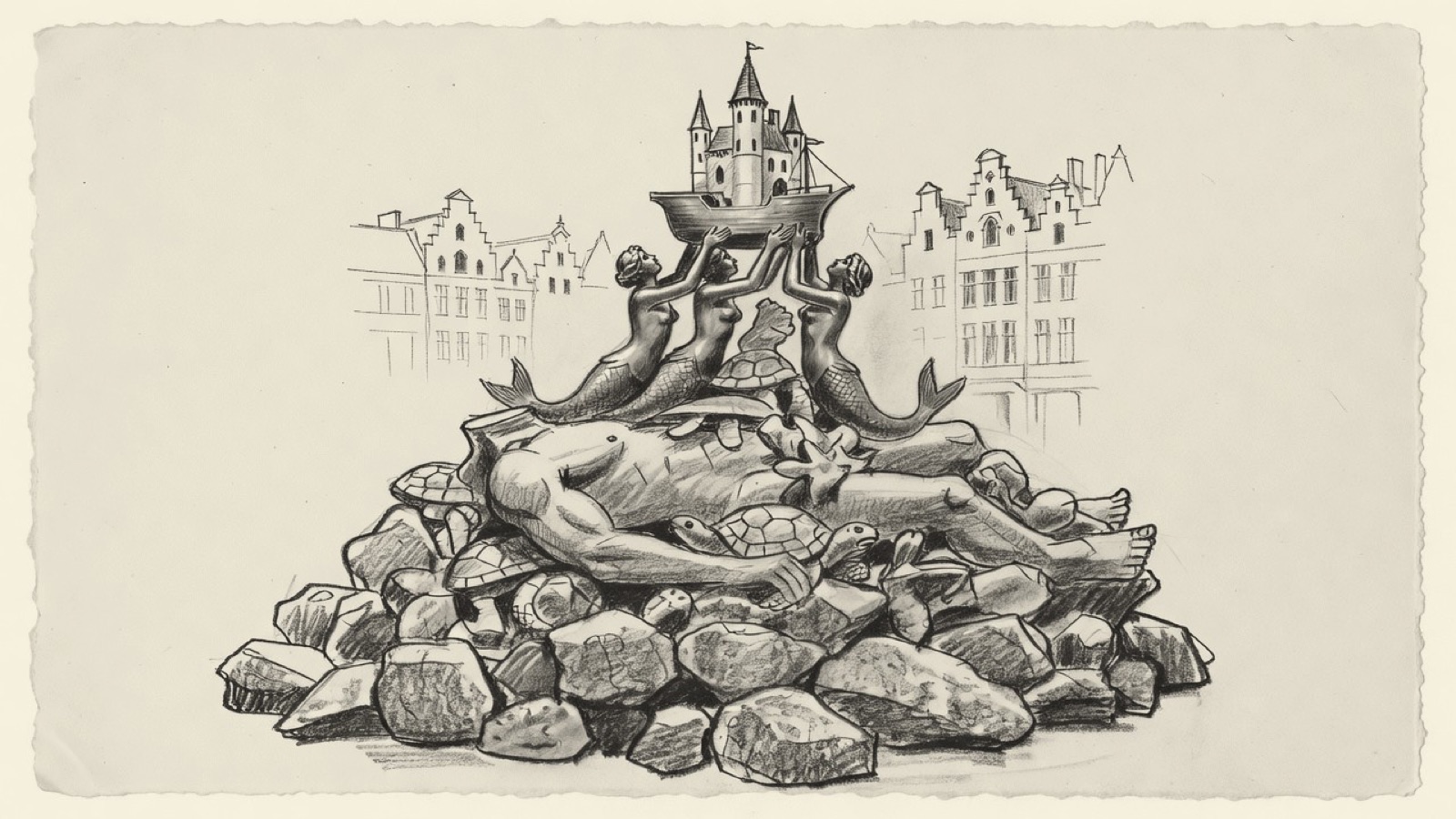
Most photographs of the fountain on the Grote Markt stop at the top, where Silvius Brabo balances on one leg and throws away a severed hand. The story begins lower down. At the foot of the monument lies the giant Druon Antigoon, naked and headless, with a turtle, a dragon, a sea lion and fish around him. His head is on the north side.
Between the giant and the hero the sculptor Jef Lambeaux stacked the city’s coat of arms in bronze. Three mermaids lean against each other and hold up a ship. On the ship stands a castle with three towers, and upright hands mark the towers. Brabo uses the castle as his pedestal. The legend, recorded since the fifteenth century, says the giant took a toll on the Scheldt and cut off the hand of anyone who would not pay, until Brabo did the same to him. It is the traditional explanation of the city’s name: hand werpen, to throw a hand.
The monument stands on a pile of rough rocks. The early designs gave it a water basin; in 1886 the basin was dropped and the rocks took its place. The fountain was inaugurated on 21 August 1887 and is 10.6 metres high.
Where to stand. Walk round it. The south side carries the signature and date: Jef Lambeaux, 1887, and the name of the Brussels foundry that cast it. The west side of the base names August Nottebohm, whose bequest paid for the work.
The Flemish heritage inventory describes the fountain figure by figure →
04 / Getting around
Walk the districts. Take the tram between them.
The city’s tourist office describes Antwerp as pocket-sized, with many of its sights within walking or cycling distance of each other. Each of the five routes is walked from end to end. Trams and buses, all run by De Lijn, are for the gaps between one district and the next.
Arriving by train
Antwerpen-Centraal is the main station, on Koningin Astridplein. Antwerpen-Berchem is a second station, served by national trains. Check which of the two is on your ticket before getting off. Trams and buses stop at Centraal, and SNCB lists luggage lockers there.
From the airports
Brussels Airport has a railway station under the terminal, and the airport lists Antwerp among the cities reached by train without a change. Journeys to and from that station usually carry a rail supplement, €6.90 when we checked, which is often already included in the ticket price. Antwerp’s own airport is in Deurne. Its website directs passengers to a De Lijn bus to Antwerpen-Berchem station and a train from there to Antwerpen-Centraal; look up the current bus line in De Lijn’s route planner, because line numbers in the city have changed.
Trams and buses
One ticket covers trams and buses alike and allows changes within its validity. De Lijn describes a tram that runs above ground from Berchem station by way of Groenplaats, the Meir, Nationalestraat and the Royal Museum of Fine Arts to the Zuid; another along the boulevards past Opera and the National Bank to the Palace of Justice; and one from the old centre past the MAS to Het Eilandje. Part of the network runs underground, in what De Lijn calls metro stations. The tunnels have been under renovation since 4 May 2026: several lines follow temporary routes and no trams run under the Scheldt to the left bank. Check the line and any diversion in the route planner on the day.
Single ticket · 60 minutes
Valid on De Lijn trams and buses, changes included. It can be paid contactless on board with a bank card or phone held to the white terminal, for up to five travellers.
Day ticket · 24 hours
Unlimited travel on De Lijn for 24 hours; €4.50 for children aged 6 to 11. The 3-day ticket costs €18 for 72 hours. Sold in the app, at ticket machines and in Lijnwinkel shops, not on board.
10-journey ticket
Ten journeys of 60 minutes each, which comes to €2.20 a journey. Several people can share one: scan it once for each passenger.
Count the journeys before buying. Three single tickets cost €9, the price of the day ticket, so the day ticket is the cheaper choice from the fourth journey in 24 hours. The 10-journey ticket costs less than singles from the eighth journey. Buy or activate a ticket before boarding unless you pay contactless on the vehicle. Children under six travel free with a paying passenger aged 12 or over.
05 / At the table
A few words worth recognising on a menu.
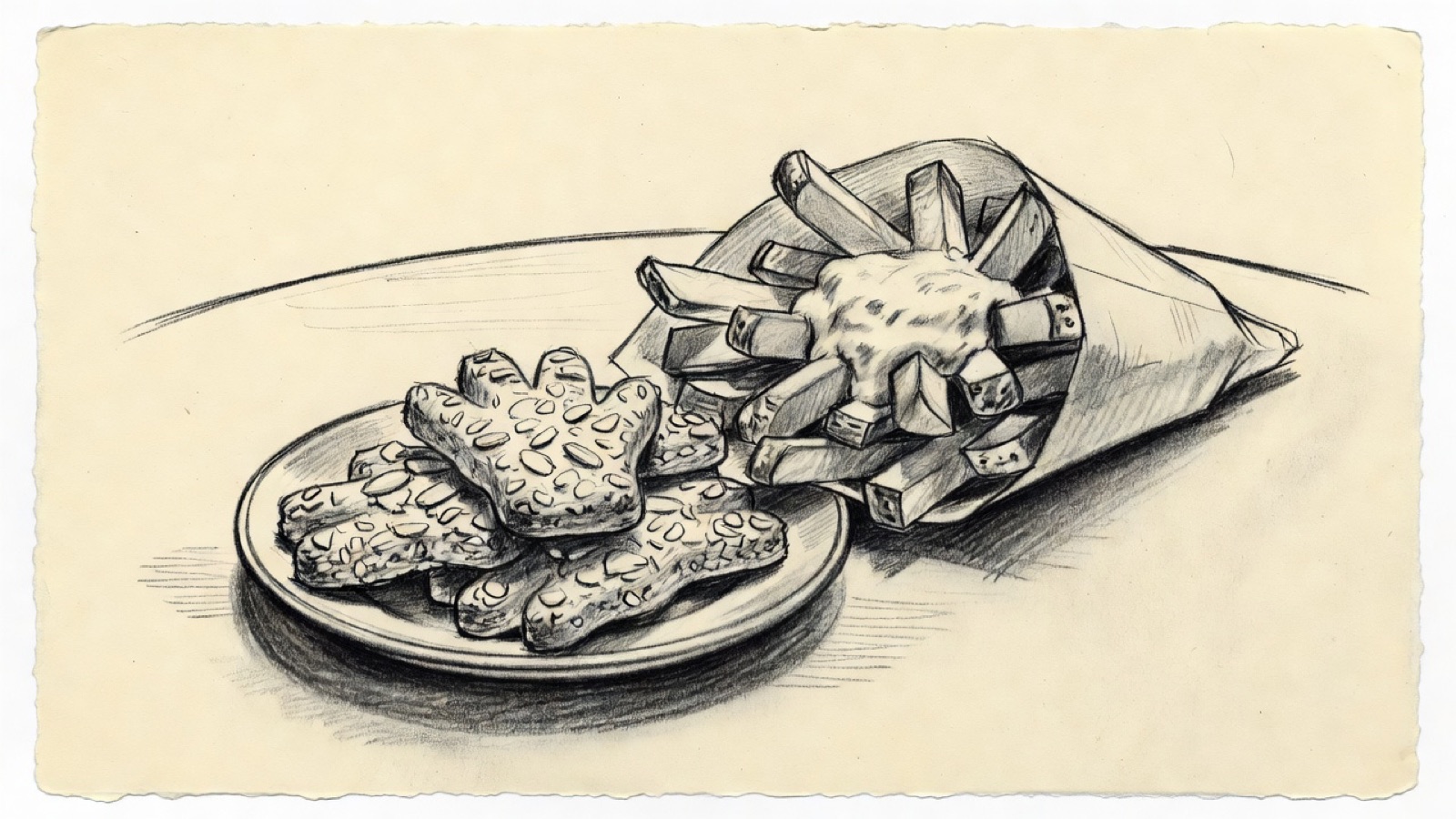
Antwerp eats from the Flemish repertoire, with a few names of its own. Recognising them is more useful than arriving with a list of things to tick off.
Antwerpse handjes
“Antwerp hands”: biscuits or chocolates made in the shape of a small hand, a local speciality since 1934. The shape refers to the legend of Brabo and the giant told by the fountain on the Grote Markt.
Fries
Sold in a paper cone or a cardboard tray, traditionally with a large spoonful of sauce on top. The choice of sauces is long; so is the list of meat snacks sold alongside.
Flemish beef stew
Beef stewed until tender and served with fries. It is one of the dishes the city’s tourist office counts among the Flemish classics, next to steak béarnaise and vol-au-vent.
Eel in green sauce
Pieces of eel in a sauce of green herbs, chervil among them. The name describes the colour of the sauce, not a side dish.
Shrimp croquettes
Croquettes filled with shrimp, served as a starter. Tomatoes stuffed with shrimp belong to the same family of dishes.
Elixir d’Anvers
A digestive liqueur made from 32 plants and herbs, produced in Antwerp since 1863. It also turns up as a filling in some Antwerpse handjes.
Bolleke
On a drinks list, a beer brewed in Antwerp.
Food background: Visit Antwerpen’s page on regional products
06 / A little local knowledge
The city carries on around you.
Scan every time you board
A card ticket is held to the scanner on boarding and again at every change. If you pay contactless, use the same bank card or phone when you change within the 60 minutes, once for each traveller in your group.
Leave the car at the edge
The whole city centre and Linkeroever form a low-emission zone, and foreign vehicles must follow its rules too: check yours in the city’s tool before driving in. Street parking in the historic centre is for permit holders only. Park-and-ride sites on the outskirts connect to tram and bus.
Read the signs in Dutch
Dutch is one of Belgium’s three official languages and the one on Antwerp’s street signs and tram stops. A plein or a plaats is a square, a markt a market square, a kerk a church, a kaai a quay. You will meet the words in the names of the stops on these routes.
07 / Continuing your trip
Other cities by train
When you are ready to leave Antwerp, compare departures from Antwerpen-Centraal. Brussels, Mechelen, Ghent and Bruges are onward options; check the actual journey and return times before making plans.
By train
Brussels
Find the trains that suit your trip
By train
Mechelen
Find the trains that suit your trip
By train
Ghent
Find the trains that suit your trip
By train
Bruges
Find the trains that suit your trip
Train searches open on Railclick. Check prices and conditions there before booking.
Facts on this page come from the official pages below, read on the date shown. Fares and services change: confirm with the operator before travelling.
- De Lijn fare overview: single €3; return €6; 10-journey €22 (€2.20 a journey); day ticket €9 (€4.50 for ages 6–11); 3-day ticket €18 (72 hours); buy or activate before boarding unless paying contactless; children under six free with a paying passenger aged 12+. · read 2026-10-10
- Single ticket €3, 60 minutes on all De Lijn buses and trams; contactless payment on the vehicle at the white terminal, up to five travellers; scan/tap again at each transfer within 60 minutes. · read 2026-10-10
- Day ticket €9 for 24 hours (€4.50 ages 6–11); sold via app/website, SMS, ticket machine and Lijnwinkel (no on-board sale listed); card tickets are scanned on boarding and at each transfer. · read 2026-10-10
- 10-journey ticket €22, 60 minutes per journey; can be used by several people, scanned once per passenger. · read 2026-10-10
- De Lijn’s description of Antwerp tram routes (Berchem station–Groenplaats via Meir, Nationalestraat, KMSKA and Antwerp South; P+R Luchtbal–Zuid via the Leien, Opera, National Bank and Palace of Justice; Mortsel–Eilandje via the old centre, the Meir and the MAS). · read 2026-10-10
- Renovation of the Antwerp metro tunnels since 4 May 2026; tram lines 3, 5, 9 and 15 on temporary routes; no trams between the left bank and Opera during the works. · read 2026-10-10
- De Lijn refers to 12 ‘metro stations’ in Antwerp (underground tram stations). · read 2026-10-10
- Antwerp described as pocket-sized, attractions within walking or cycling distance; trams and buses run by De Lijn; a single ticket allows unlimited changes between trams and buses within 60 minutes. · read 2026-10-10
- Street parking in the historic city centre for permit holders only (since 1 August 2023); low-emission zone notice for visitors; park-and-ride. · read 2026-10-10
- Low-emission zone covers the entire city centre and Linkeroever; foreign vehicles must comply; check the vehicle before entering; park-and-ride sites on the outskirts with tram and bus connections. · read 2026-10-10
- Antwerpen-Centraal: address Koningin Astridplein 27; luggage lockers; connecting trams and buses. · read 2026-10-10
- Brussels Airport-Zaventem station is beneath the terminal; Antwerp reached without a change; rail supplement of €6.90 usually applies and is often included in the ticket price. · read 2026-10-10
- Antwerp Airport: buses to Antwerpen-Berchem station, trains from Berchem to Antwerpen-Centraal; Berchem has national train connections. · read 2026-10-10
- Brabo Fountain: Jef Lambeaux, inaugurated 21 August 1887, 10.6 m high; planned water basin replaced by the rock base in 1886; figures (Antigoon, sea creatures, mermaids, ship, castle with upright hands, Brabo); inscriptions on south and west sides; Nottebohm bequest; legend and the name ‘(H)ant werpen’. · read 2026-10-10
- Grote Markt: Brabo Fountain by Jef Lambeaux, legend of Brabo and the giant’s hand, town hall and guild houses. · read 2026-10-10
- Rubenshuis: the artist’s residence is temporarily closed for restoration; Rubens Experience, the garden and the library are open; Rubens converted the house into an Italian city palace and lived, worked and died there. · read 2026-10-10
- Cathedral of Our Lady: Rubens’s works in the cathedral; notice that his epitaph triptych is not currently on display. · read 2026-10-10
- KMSKA lists Peter Paul Rubens and James Ensor at the head of its collection pages. · read 2026-10-10
- Antwerpse handjes (since 1934, biscuits or chocolates in the shape of a hand, some with a filling with Elixir d’Anvers, refer to the Brabo legend); fries in a paper cone or cardboard tray with sauce; Elixir d’Anvers (digestive liqueur of 32 plants and herbs, since 1863); Bolleke as a beer brewed in Antwerp. · read 2026-10-10
- Flemish classics named by the tourist office: beef stew with fries, steak béarnaise, eel in green (herb, chervil) sauce, tomatoes stuffed with shrimp, shrimp croquettes, vol-au-vent, dame blanche. · read 2026-10-10
- Belgium has three official languages: Dutch, French and German; Flemish Community and Flemish Region. · read 2026-10-10
- Railclick’s own page for Antwerp–Brussels (origin key ‘antwerpen-centraal’), which also links the Antwerp–Mechelen, –Ghent and –Bruges pages used in ‘trenes’. · read 2026-10-10