Skip to content
← Brussels

Brussels / Science & Europe

European Quarter: from Iguanodons to Parliament

Thirty Iguanodon skeletons, a pond with Egyptian geese and rose-ringed parakeets, a resin statue made by visually impaired children and a chapel copied from a fifteenth-century church. The walk ends on the square that European officials and journalists call Plux, beside the European Parliament.

1.7 km on foot · 6 stops

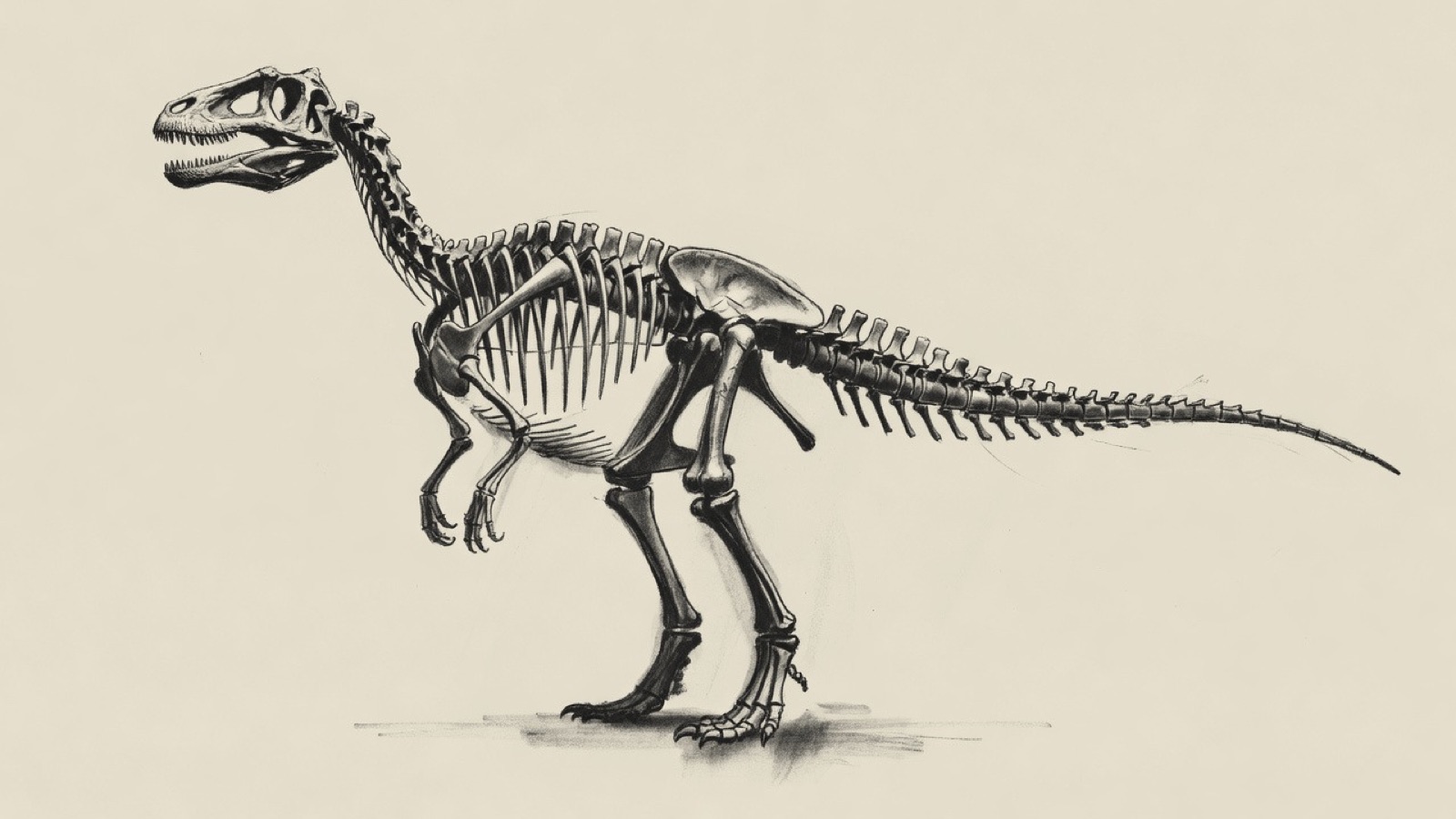
Charcoal illustration of a mounted dinosaur skeleton standing on its hind legs.
An Iguanodon skeleton, as a naturalist might sketch it. Charcoal illustration, not a drawing of the museum's specimens.

Leopold Park lies within the Leopold Quarter, the part of Brussels also called the European Quarter. The Museum of Natural Sciences and the Paul-Henri Spaak building of the European Parliament both adjoin it, and the House of European History is inside it, in the former Eastman Dental Hospital.

The House of European History is an initiative of the European Parliament, proposed in 2007 and opened in 2017. The Parliament's Brussels complex, the Espace Léopold, was begun in 1989 so that it would be closer to the other institutions of the European Union in the city, while its official seat stays in Strasbourg. In between come a statue inaugurated in 2003 and the Chapel of the Resurrection, which took on its ecumenical character in 2001.

Before you set off

This route was drawn on the map and has not been walked by us yet. It has not been assessed for step-free access.

Your pace, your stops

We don’t give walking times: everyone moves through a city at a different pace. A route is a suggestion that links places worth seeing. You decide where to stop and what you can take on today.

123456N ↑
Museum of Natural Sciences0.0 / 1.7 km

Track sketch · north up · not a street map · Route data © OpenStreetMap contributors

01Natural history beside Leopold Park50.8367° N · 4.3764° E

Museum of Natural Sciences

The Museum of Natural Sciences stands at 29 rue Vautier, beside Leopold Park. It is devoted to natural history and belongs to the Royal Belgian Institute of Natural Sciences, which in turn comes under the Belgian Federal Science Policy Office. Besides its public exhibitions it has a research department.

Its Dinosaur Hall is the largest museum hall in the world given over entirely to dinosaurs. The chief exhibits are 30 fossil Iguanodon skeletons found at Bernissart, in Belgium, in 1878. The museum also keeps the Ishango bone, which Jean de Heinzelin de Braucourt found in the Belgian Congo in 1960.

Next on footLeopold Park lies to the north-east.

02A pond, rare trees and the Parliament alongside50.8383° N · 4.3794° E

Leopold Park

Leopold Park is a public park of 6.43 hectares in the Leopold Quarter. The Museum of Natural Sciences borders it, and so does the Paul-Henri Spaak building of the European Parliament.

The pond is the park's main feature, and the Maelbeek stream supplies its water. Many of the trees are rare, survivors of a botanical garden. Mallards, moorhens and coots live here, along with Egyptian geese and rose-ringed parakeets.

Next on footThe House of European History lies to the north.

03An initiative of the Parliament, in a former dental hospital50.8399° N · 4.3789° E

House of European History

The House of European History occupies the former Eastman Dental Hospital in Leopold Park, beside the Lycée Émile Jacqmain. It is a museum of Europe's recent history, with a permanent exhibition on European history and integration and temporary exhibitions as well.

The museum is an initiative of the European Parliament. Hans-Gert Pöttering, president of the Parliament at the time, proposed it in 2007, and it opened on 6 May 2017.

Next on footThe Statue of Europe lies to the north.

04European integration in resin, made by children50.8414° N · 4.3788° E

Statue of Europe

The Statue of Europe, also called Unity in Peace, stands in the garden of Convent Van Maerlant, where the Rue Van Maerlant meets the Chaussée d'Etterbeek. It is made of resin, measures more than 5 metres and weighs close to 800 kilograms. Arms of different colours, wound closely together, stand for the peoples of Europe and their varied cultures; together they hold up a sphere that recalls the flag of the European Union, with the dove of peace on top. The sculpture stands for peace through European integration and for the Union's motto, "United in Diversity".

Visually impaired children made the statue, from the modelling to the paint, under the French artist Bernard Romain, who wanted to show that disability does not rule anyone out. The inauguration, on 9 December 2003, was carried out by Neil Kinnock, who was then Vice-President of the European Commission, and Viviane Reding, the Commissioner for Culture. That was the European Year of People with Disabilities, and the Union's enlargement to the east was still to come.

Next on footThe Chapel of the Resurrection lies to the south-west.

05A copy of a demolished city-centre church50.8413° N · 4.3787° E

Chapel of the Resurrection

The Chapel of the Resurrection, also known as the Chapel for Europe, is a Catholic church with an ecumenical purpose, next to the former Convent Van Maerlant. Its predecessor went back to the fifteenth century and stood in the city centre until 1907, when it was pulled down as the city was redeveloped. A replica, faithful to the original on the outside, was built on the present site. The current name and the ecumenical character date from 2001, after a major renovation.

Next on footPlace du Luxembourg lies to the south-west.

06The square beside the European Parliament50.8394° N · 4.3727° E

Place du Luxembourg

Place du Luxembourg lies between the Rue d'Arlon and the Rue du Luxembourg, most of it in the municipality of Ixelles and a small part in the City of Brussels. The quarter's European officials and journalists know it as Place Lux or Plux. The Monument to John Cockerill stands in the middle.

The European Parliament flanks the square. Its complex beside it, the Espace Léopold, is a group of buildings whose construction began in 1989. The oldest, the Paul-Henri Spaak building, contains the president's offices as well as the chamber where debates are held; the Altiero Spinelli building is the largest. Parliament's official seat is the Louise Weiss building in Strasbourg, which it is legally bound to keep. It built the Brussels complex to be nearer the other institutions of the European Union, most of which are in Brussels.

End of the routeThe route ends here.

Open in Google Maps Download GPX

This track was calculated on a map and has not yet been checked on foot. Follow public paths and local signs if conditions differ.

Facts taken from the Wikipedia articles below (Wikipedia contributors, CC BY-SA 4.0) and rewritten for this route; this is not a copy of their text. Generated with editorial rules and checked 10 October 2026. Transport lines come from OpenStreetMap: confirm with the operator before travelling.